

CBDrmd.com Launches CBD Gummies and CBD Oil Transparency Initiative
New educational resource helps adults better understand CBD gummies, CBD oil, product labels, lab reports, ingredient disclosures, THC information, refund policies, and responsible CBD product research.
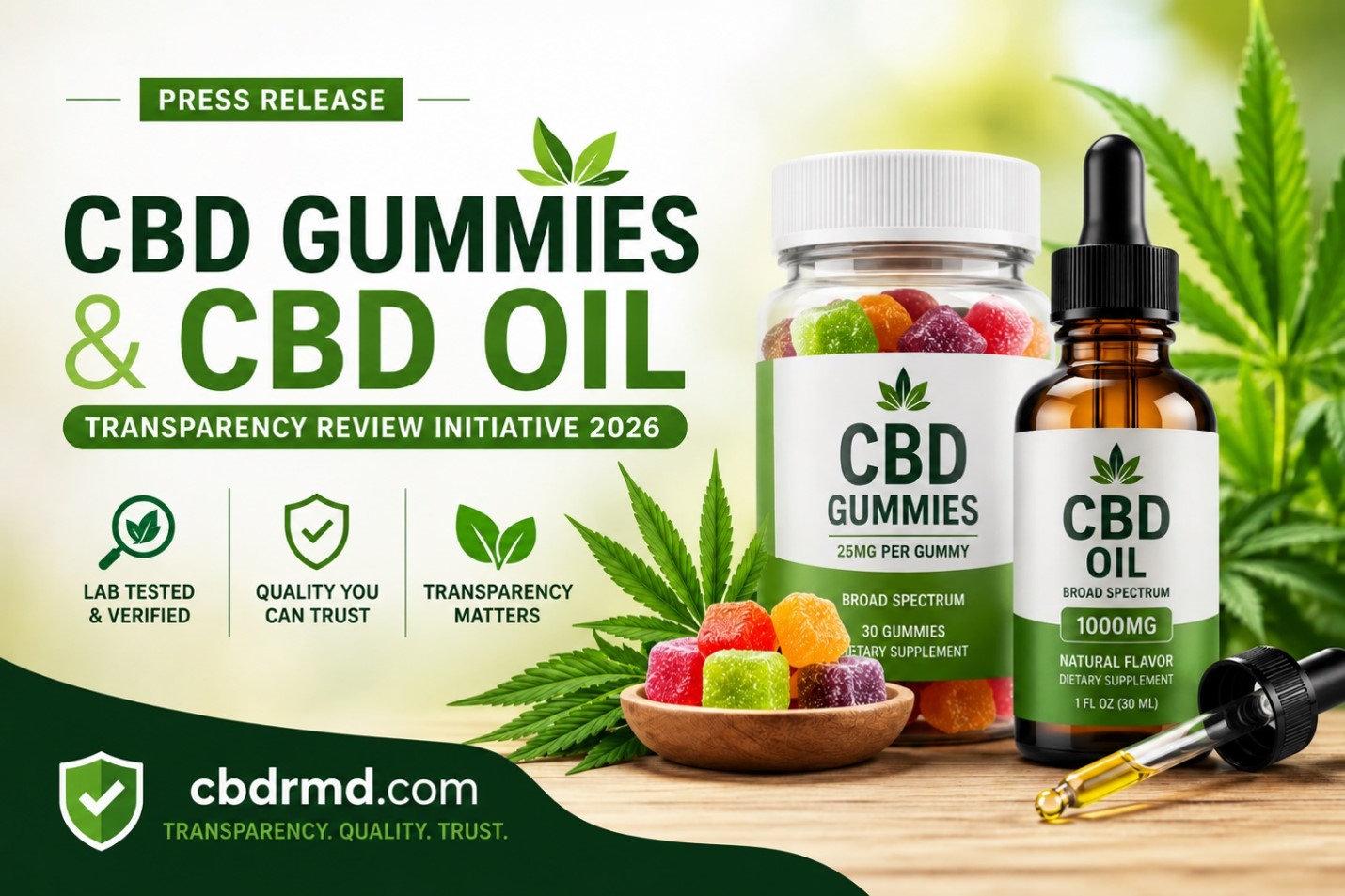
NEW YORK,USA, July 02, 2026 (GLOBE NEWSWIRE) -- CBDrmd.com today announced the launch of its 2026 CBD Label Literacy and Lab Report Education Hub, a new consumer-focused resource designed to help adult shoppers better understand how to evaluate CBD gummies, CBD oil, product labels, third-party lab reports, ingredient disclosures, THC information, refund policies, subscription terms, and brand transparency before making purchasing decisions.
The new education hub was created for consumers who want more clarity when researching CBD products online. CBDrmd.com said the CBD marketplace continues to include a wide range of product formats, label styles, cannabinoid profiles, and brand claims. For many consumers, the challenge is not simply finding CBD products. The harder part is understanding what information should be examined before ordering.
CBDrmd.com does not manufacture, prescribe, or provide medical guidance regarding CBD products. The site operates as a consumer information platform focused on CBD product research, CBD gummies education, CBD oil education, lab testing transparency, product label awareness, buyer checklists, and responsible CBD brand evaluation.
“Many consumers see CBD gummies or CBD oil online and assume the comparison process is simple,” said a spokesperson for CBDrmd.com. “But once they begin looking closer, they realize every product page is different. CBD amounts, serving sizes, THC disclosures, lab reports, ingredients, refund policies, and subscription terms can all vary. This education hub was built to help consumers slow down and examine those details more carefully.”
The 2026 CBD Label Literacy and Lab Report Education Hub will focus on plain-language consumer education. CBDrmd.com plans to publish guides explaining how to read CBD product labels, how to interpret certificates of analysis, how to compare CBD gummies, how to compare CBD oil, what common CBD terms mean, and what purchase terms consumers should check before ordering.
A major part of the hub is label literacy. CBDrmd.com said many CBD shoppers focus first on product names, flavor options, price, or packaging. While those details may matter, the company believes the more useful information is often found in the product label, ingredient list, supplement facts or product facts panel, warning language, serving instructions, and certificate of analysis.
The hub will help consumers examine common label details such as total CBD amount, CBD per serving, number of servings, package count, bottle size, ingredient list, flavoring, carrier oil, cannabinoid profile, THC disclosure, directions for use, and warnings.
For CBD gummies, CBDrmd.com will explain why consumers should check how much CBD is listed per gummy, how many gummies are included in the package, whether THC is present, whether the product is described as full-spectrum, broad-spectrum, or isolate, and whether the lab report matches the product.
CBD gummies can look simple because the serving is usually pre-measured. That is one reason many consumers like them. But CBDrmd.com said shoppers should still examine the details carefully. A gummy product may vary by cannabinoid profile, CBD amount per gummy, THC content, ingredient list, sugar content, flavoring, serving instructions, and warning language.
For CBD oil, the education hub will explain why consumers should examine bottle size, total CBD amount, CBD per serving, dropper instructions, carrier oil, flavor ingredients, lab testing access, cannabinoid profile, THC information, and purchase terms.
CBD oil can be more flexible than gummies because the serving size may depend on the dropper and product instructions. That flexibility can be useful, but it can also make comparison harder. Two CBD oil products may look similar in bottle size but contain different total CBD amounts or different serving guidance. CBDrmd.com said the hub will help readers understand how to compare these details more clearly.
Another central part of the new hub is third-party lab report education. Many CBD brands provide certificates of analysis, often called COAs, to show testing information for their products. These reports may include cannabinoid content, THC levels, batch numbers, test dates, contaminant screening, pesticide testing, heavy metal testing, residual solvent testing, microbial testing, or other quality-related information depending on the product and the lab report provided by the brand.
CBDrmd.com said consumers should not only ask whether a CBD brand has a lab report. They should also ask whether the report is easy to find, whether it matches the product, whether it appears current, whether the batch number is visible, whether CBD and THC levels are clearly shown, and whether the document is understandable for an average buyer.
“Lab reports are one of the most important transparency tools in the CBD category, but many consumers do not know how to read them,” the spokesperson said. “A certificate of analysis can be helpful, but only if the consumer knows what to look for. Our goal is to make that process less intimidating.”
The education hub will include lab report explainers that define common terms and testing sections. CBDrmd.com plans to create guides covering cannabinoid profile, THC percentage, CBD amount, batch number, test date, limit of quantitation, pass/fail results, contaminant screening, and testing categories commonly found on CBD lab reports.
The platform will also explain why consumers should compare lab reports with product labels. If a CBD gummies product states a certain CBD amount per gummy, the consumer may want to check whether the lab report supports the product’s cannabinoid information. If a CBD oil product is marketed with a specific cannabinoid profile, the consumer may want to verify whether the certificate of analysis provides related details.
CBDrmd.com will not claim that every lab report is equal or that every CBD product with a lab report is automatically appropriate for every consumer. Instead, the site will present lab testing access as one important part of a broader research process.
The hub will also focus on CBD terminology. Many consumers researching CBD gummies and CBD oil encounter terms such as full-spectrum CBD, broad-spectrum CBD, CBD isolate, hemp extract, cannabinoids, terpenes, THC-free, third-party tested, batch tested, lab verified, certificate of analysis, and hemp-derived THC.
These terms can be confusing, especially for first-time buyers. CBDrmd.com said its education hub will explain how these terms are commonly used and why consumers should examine the product label and lab report rather than relying only on marketing language.
The platform will encourage consumers to verify product details directly. A brand may describe a product as full-spectrum, broad-spectrum, or isolate, but buyers should still examine the label, ingredient list, THC disclosure, and lab report to better understand what is being offered.
Another topic covered by the hub is THC awareness. CBDrmd.com said consumers should pay careful attention to THC information when evaluating CBD gummies, CBD oil, and other CBD products. Some consumers may want full-spectrum products, while others may prefer products that are positioned as THC-free. Some may be subject to drug testing or may want to avoid THC for personal reasons.
The education hub will encourage readers to examine THC disclosures carefully and understand that laws, product rules, and personal risk factors may vary. CBDrmd.com will also remind consumers to consider drug testing concerns and speak with a qualified professional if they are unsure whether a CBD or hemp-derived product is appropriate for them.
The hub will also include buyer checklists for CBD gummies and CBD oil. These checklists are designed to help consumers slow down before purchasing and examine important details in a more organized way.
For CBD gummies, checklist questions may include:
Is the CBD amount per gummy clearly listed?
How many gummies are included in the package?
Is the serving size easy to understand?
Does the product contain THC?
Is the product full-spectrum, broad-spectrum, or isolate?
Are ingredients and flavoring details visible?
Is a third-party lab report available?
Does the lab report match the product or batch?
Are warnings easy to find?
Are refund terms clear?
Is there a subscription or recurring billing option?
Is customer support information visible?
For CBD oil, checklist questions may include:
What is the total CBD amount in the bottle?
What is the CBD amount per serving?
What is the bottle size?
Is the dropper guidance clear?
Is the carrier oil listed?
Are flavor ingredients disclosed?
Does the product contain THC?
Is the lab report current?
Does the certificate of analysis match the product?
Are purchase terms easy to understand?
Is the refund policy visible?
Is there a subscription option?
Does the company provide clear contact information?
CBDrmd.com said the checklists are not intended to make CBD shopping more complicated. They are intended to help consumers avoid rushed decisions based only on product images, discounts, or broad advertising language.
The education hub will also address purchase transparency. CBDrmd.com said many consumers spend time comparing CBD amount and product format but overlook checkout details. Refund policies, shipping fees, return rules, subscription terms, cancellation instructions, bundle pricing, and auto-ship language can all affect the buying experience.
A CBD gummies product may look affordable until the consumer compares package count, CBD per gummy, shipping cost, and subscription terms. A CBD oil product may appear to offer strong value until the buyer examines bottle size, total CBD amount, serving count, and refund conditions.
CBDrmd.com plans to publish resources explaining how to examine these purchase details before ordering. The platform will encourage consumers to check whether an order is a one-time purchase or subscription, whether discounts require recurring billing, how cancellation works, whether shipping is included, and what the return policy requires.
The site will also cover common CBD buying mistakes. One mistake is choosing a product based only on flavor or packaging. Another is assuming that all CBD gummies or CBD oil products are the same. Another is ignoring THC information. Some consumers may also fail to check lab reports, overlook subscription settings, or rely too heavily on product claims without examining the label.
CBDrmd.com said better consumer education can help reduce confusion. The platform believes consumers do not need exaggerated claims or complicated technical language. They need clear explanations, useful checklists, and a better understanding of what product information means.
The new education hub is also designed to support first-time CBD shoppers. Many new consumers do not immediately understand the difference between CBD gummies and CBD oil, how serving sizes are displayed, why lab reports matter, what full-spectrum means, or why THC disclosure is important. CBDrmd.com will explain these topics in simple terms while still encouraging careful product evaluation.
The platform will also publish resources for returning CBD shoppers who want to compare products more closely. These readers may already understand basic CBD formats but want help examining lab testing, labels, ingredient lists, purchase terms, and brand transparency signals.
CBDrmd.com said the education hub will continue expanding throughout 2026. Planned topics include how to read a CBD certificate of analysis, what to check before buying CBD gummies, how to compare CBD oil labels, why serving size matters, how to examine THC disclosures, what CBD lab reports can and cannot tell consumers, and how refund policies affect product value.
The company said its long-term goal is to make CBDrmd.com a practical starting point for CBD product research. The site will not replace medical advice, legal guidance, or professional consultation. Instead, it will help consumers understand what product details may be useful to examine before buying.
“Consumers do not need to be experts to ask better questions,” the spokesperson said. “They need a simple framework. Is the label clear? Is the lab report available? Is the CBD amount disclosed? Is THC information visible? Are the purchase terms understandable? Those questions can make the research process much more useful.”
CBDrmd.com said the 2026 CBD Label Literacy and Lab Report Education Hub is now part of the site’s broader editorial plan, which includes CBD product education, CBD gummies resources, CBD oil guides, brand transparency articles, buyer checklists, and responsible CBD research content.
CBDrmd.com is available at:
About CBDrmd.com
CBDrmd.com is a consumer information platform focused on CBD gummies, CBD oil, CBD product education, CBD label literacy, lab testing transparency, certificate of analysis explainers, product comparison resources, buyer checklists, and responsible CBD research. The site publishes educational content designed to help adult consumers evaluate CBD product information, lab reports, ingredient details, company disclosures, purchase terms, THC information, and transparency signals before making purchasing decisions.
Media Contact
CBDrmd.com
Website: https://cbdrmd.com
Email: press@cbdrmd.com
Disclaimer
This content is for informational and educational purposes only and does not constitute medical advice, legal advice, diagnosis, treatment, or individualized product recommendation. CBDrmd.com does not manufacture, prescribe, or provide medical guidance regarding CBD products. CBD products are not intended to diagnose, treat, cure, or prevent any disease. Consumers should consult a qualified healthcare professional before using CBD products, especially if they have a medical condition, take medication, are pregnant or nursing, are subject to drug testing, or have questions about whether CBD is appropriate for them. Laws and regulations regarding CBD, hemp, and THC products may vary by jurisdiction.

CBDrmd.com Website: https://cbdrmd.com Email: press@cbdrmd.com
Legal Disclaimer:
EIN Presswire provides this news content "as is" without warranty of any kind. We do not accept any responsibility or liability for the accuracy, content, images, videos, licenses, completeness, legality, or reliability of the information contained in this article. If you have any complaints or copyright issues related to this article, kindly contact the author above.
